Short answer: A tingle or shock from a tap, bath or radiator means metal pipework has become live, usually through a faulty appliance or a missing earth connection. Stop using that water point, switch off at the consumer unit if you can do it safely, and get an electrician to test the earthing and bonding before anyone touches it again.
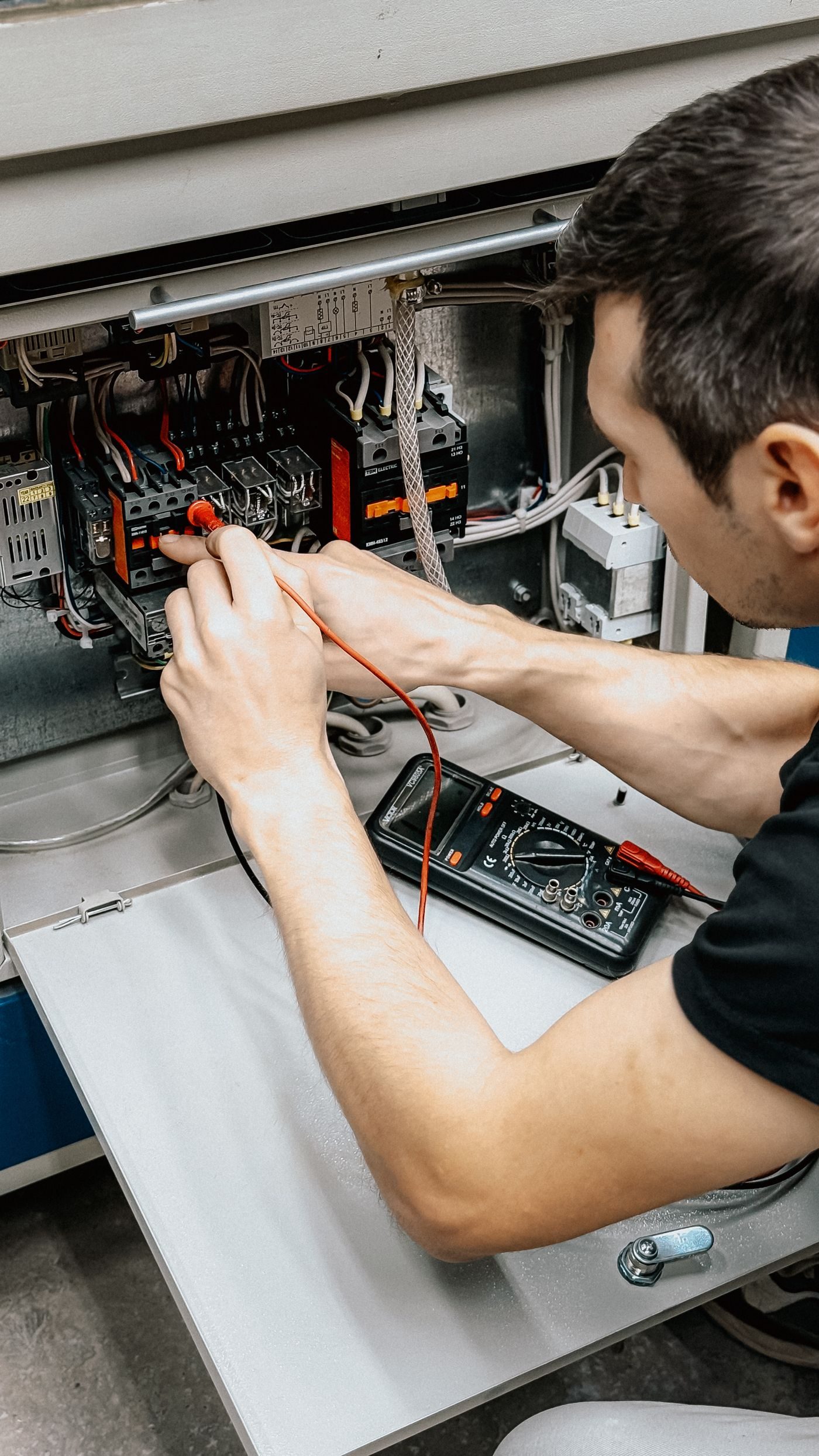
A tingle from a tap is one of those faults people tend to shrug off. It is short, it does not seem to hurt, and the next time you touch the tap it might feel fine. It is still a warning that metal in your home has become live, and it needs looking at before it happens again.
This guide explains what is usually going on, what to do straight away, and what an electrician will test. If you want us to come and find the cause, our electrical fault finding page explains how a visit runs.
If someone has had a shock
Safety of people comes first. NHS inform’s electric shock first aid guide sets out the steps:
- Do not touch the person if they may still be in contact with the electricity.
- Switch off at the mains or meter if you can. If not, unplug the appliance or pull the cable free.
- If you cannot switch it off, stand on something dry like a wooden box or plastic mat and push the source away with a wooden broom handle.
- Phone 999.
- Once they are clear of the supply, check their airway, breathing and circulation.
Anyone who has had a real shock, not just a faint tingle, should get medical advice even if they feel fine afterwards.
What a tingle from a tap usually means
Your home’s metal water and gas pipes are supposed to be joined to the main earth by green and yellow cables. Electricians call this main bonding. It stops metal parts from sitting at a different voltage to each other if a fault happens.
A tingle means that has broken down somewhere. Common causes in London homes:
| What has happened | How it shows up |
|---|---|
| A plumber has cut in a length of plastic pipe | The metal pipe after the plastic section is no longer earthed. A fault elsewhere can make it live. |
| The earth clamp on the water or gas pipe has come loose or been removed | Often after a kitchen refit, a new meter, or a boiler swap |
| A faulty appliance is leaking current into the pipework | Washing machine, dishwasher, electric shower, immersion heater or boiler pump |
| A fault on the incoming supply earth | Rare, but it can make every earthed part slightly live. This one is for the network operator. |
| Old wiring with no earth at all on some circuits | Common where black rubber cable is still in use. See our guide to rubber wiring. |
Plastic plumbing is a big part of this. Many London homes have had several bathrooms and kitchens fitted over the years. Each refit can leave a mix of copper and plastic pipe, and the earthing does not always get redone to match.
What to do now
- Stop using the tap, bath, shower or radiator that gave the tingle.
- Tell everyone in the home, especially children.
- If you can reach the consumer unit safely without touching the affected metal, switch off the main switch.
- If you suspect a particular appliance, switch it off at the wall and unplug it, but only if you can do that without touching the pipework.
- Do not try to “test” it again with your hand.
If the main switch is off and nothing in the home works, that is expected. It keeps you safe until someone can test the installation.
What an electrician will test
A good electrician will start with the earthing at the supply and work inwards. A typical visit looks like this:
- Check the main earth at the meter position and the condition of the main earthing cable.
- Find the main bonding clamps on the water and gas pipes and test that they are tight and continuous.
- Measure the voltage between the pipe that gave the tingle and a known earth.
- Isolate circuits one at a time, and appliances one at a time, to find the source of the leak.
- Test insulation on circuits that look suspect. This test checks whether current is escaping from the cables.
- Add or repair bonding where plastic pipe has broken the earth path.
If the fault turns out to be on the supply side, the electrician will tell you to call 105. That number connects you to the network operator for your postcode. In most of London that is UK Power Networks. In Ealing and Hounslow it is SSEN, as the Mayor’s answer to the London Assembly confirms.
Why it can feel worse in a bathroom
Wet skin carries current much more easily than dry skin. A tingle that felt faint at the kitchen sink could feel very different in a bath. That is why bathrooms are treated as special locations in the wiring rules, and why new circuits there are notifiable under Part P of the Building Regulations in England. The Approved Document P guidance lists this work.
If any work is needed in your bathroom after the fault is found, ask the electrician how it will be certified. A registered competent person can self certify. If they are not registered, the work has to go through your council’s building control.
Local pattern: converted flats and mixed pipework
London has a lot of homes that have been altered many times. The VOA’s Council Tax stock of properties figures show that 57% of London homes are flats or maisonettes. In boroughs like Wandsworth and Hackney the share is far higher, with a large number of Victorian houses split into flats.
In a converted house, the pipework can run through several flats. A plumber fixing a leak in the flat above may change a section of pipe that also feeds you. Bonding can be lost without anyone in your flat knowing. If you live in a converted flat in somewhere like Wandsworth, it is worth asking for the bonding to be checked whenever plumbing work has been done in the building.
Signs that point to a bigger earthing problem
Call for help the same day if you notice any of these alongside the tingle:
- More than one metal fitting gives a tingle
- Lights dim or flicker when an appliance switches on
- The RCD (the safety switch with a test button on your consumer unit) trips often
- You smell burning near the meter or consumer unit
- The tingle is stronger when it rains or after a leak
London Fire Brigade lists scorch marks, flickering lights, hot plugs and sockets, and breakers that trip for no obvious reason as signs of a possible electrical problem. Tenants are within their rights to ask their landlord to have it checked.
Getting it sorted
A tingle is a fault you cannot see, and it rarely fixes itself. If you are in London and you have felt a shock from a tap, bath or radiator, switch off what you safely can and ask for the earthing to be tested. You can request a visit through our fault finding service. The price is confirmed once the electrician has looked at the job.
Quick questions
Is a small tingle from a tap dangerous?
Yes. A tingle means current is flowing through you to earth. The amount can rise without warning, for example when your hands are wet or you touch another metal object at the same time. Treat it as a fault that needs testing the same day.
Why would a radiator give me a shock?
Radiators and pipes are meant to be connected to earth. If a heating repair added plastic pipe, or an earth clamp has come off, the metal can be left floating. A fault on the boiler, a pump or an immersion heater can then make it live.
Can I check the earth clamps myself?
You can look for green and yellow cables clamped to pipes near your gas meter and water stop tap, but do not handle them or the pipes if you have felt a tingle. Leave the testing to an electrician.
What if someone has been hurt?
Do not touch them while they may still be in contact with the supply. Switch off at the mains if you can, then phone 999. NHS inform has clear first aid steps.
Last updated 23 October 2026. Written for homes in London. Rules can change, so check the linked sources for the latest position.