Short answer: AFDDs (arc fault detection devices) are required on socket circuits up to 32 amps in four types of building: care homes, high rise residential buildings, houses in multiple occupation and purpose built student accommodation. In other homes they are only recommended. They do not have to be added to an existing board unless new work brings the circuit into scope.
What an AFDD does
An arc is a spark that jumps across a gap in a cable or connection. It happens when a cable is crushed under a carpet gripper, nicked by a screw, or when a terminal works loose. Arcs can get very hot and set fire to dust, wood or plastic nearby. They can also be too small for a normal breaker or RCD to notice.
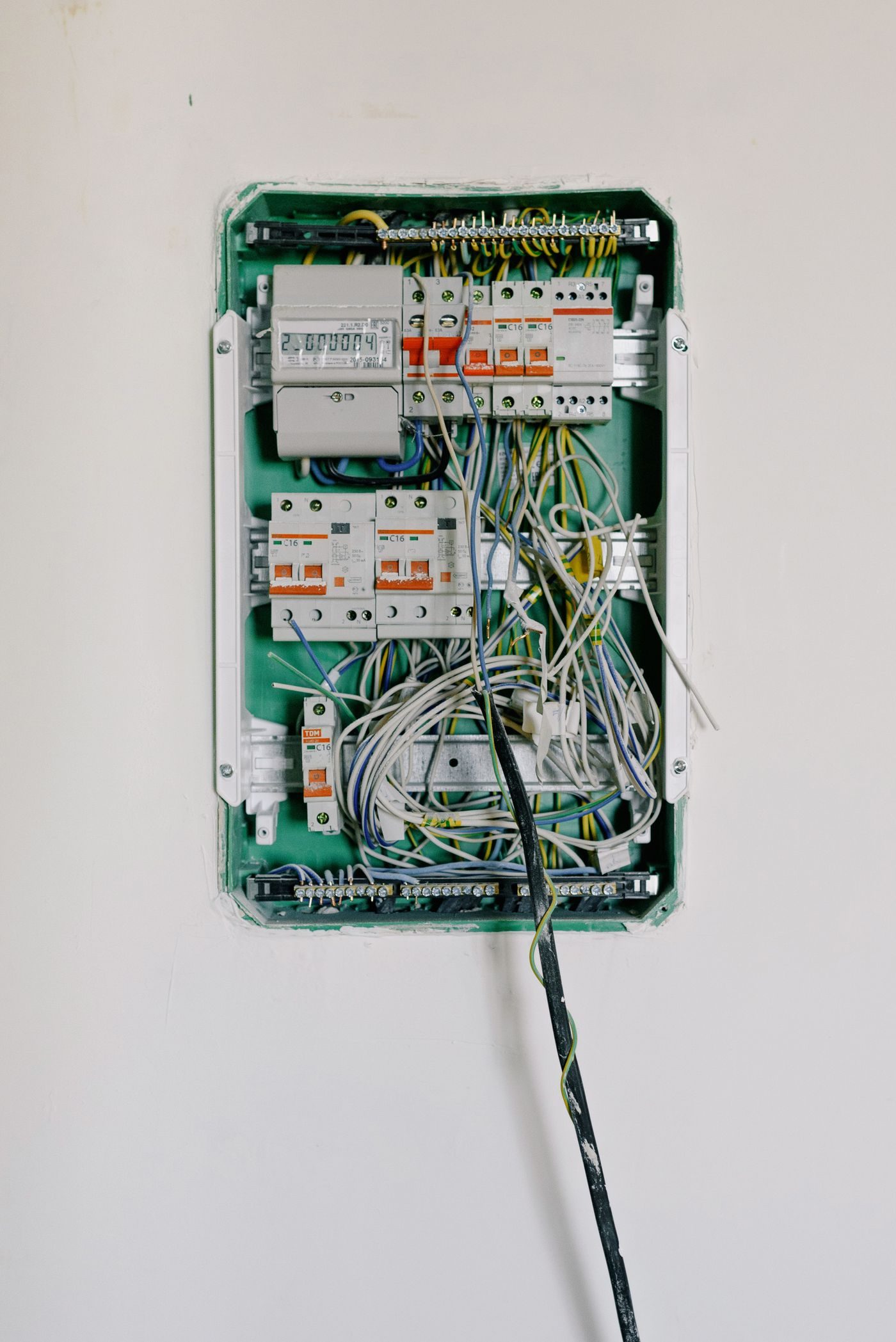
An AFDD (arc fault detection device) watches the shape of the current on a circuit. When it recognises the pattern of an arc, it switches the circuit off. It sits in the consumer unit next to, or combined with, the breaker for that circuit.
It adds to the other protection rather than replacing it. Breakers deal with overloads and short circuits. RCDs deal with current leaking to earth. AFDDs deal with arcing.
When they are required
The current wiring standard is BS 7671:2018+A4:2026. The NICEIC Amendment 4 FAQ sets out the position. AFDDs are required for socket outlet circuits rated up to 32 amps in four types of building:
| Building type | Required? |
|---|---|
| Care homes | Yes, on socket circuits up to 32A |
| High rise residential buildings (over 18 m, or more than six storeys) | Yes, on socket circuits up to 32A |
| Houses in multiple occupation (HMOs) | Yes, on socket circuits up to 32A |
| Purpose built student accommodation | Yes, on socket circuits up to 32A |
| Other homes, including most flats and houses | Recommended, not required |
The reason given is that in these buildings nobody knows what residents will plug in, and a fire affects many people at once.
Amendment 4 changed one word. “Higher risk residential buildings” became “high rise residential buildings”. The NICEIC is clear that this is a rewording, not a removal. It was done to keep the BS 7671 definition apart from the wider one in the Building Safety Act. For counting storeys, the ground floor counts.
When they are only recommended
In an ordinary house or a flat in a low rise block, AFDDs are recommended. That means an electrician should discuss them with you when designing new work, but you can choose not to fit them.
Things that make them more worth considering:
- older cable, especially if any rubber insulated cable may be left in the floors (see our guide to rubber wiring)
- timber framed buildings or lots of exposed timber
- a resident who would struggle to escape a fire
- rooms used for charging lots of devices
What this means in Hackney
Hackney’s housing makes this question come up often. The VOA stock of properties for 2025 shows 81.9% of homes in the borough are flats or maisonettes, the highest share in our London areas, and 29.4% of all homes were built before 1900.
That gives three common situations:
- Converted Victorian terraces in Dalston, De Beauvoir, Clapton and Stoke Newington. Each flat usually has its own meter and consumer unit. If the building is let as an HMO, socket circuits in new work need AFDDs. If it is a block of self contained flats under six storeys, they are recommended.
- Tall council and housing association blocks. Some are over 18 metres. New or altered socket circuits in those flats fall into the high rise category.
- Converted warehouses in Hackney Wick. Height and use vary building by building. The designer should check the building against the definition before deciding.
If you are a landlord, check how the property is classed for licensing with the council as well. HMO status for licensing and for BS 7671 are decided separately, so ask your electrician to confirm which applies to the electrics. More on the borough is on our Hackney electrician page.
Existing boards and EICRs
An existing consumer unit without AFDDs is not suddenly faulty. Rules on new devices apply to new work. On an EICR (Electrical Installation Condition Report), the lack of an AFDD on an existing circuit would normally be at most an improvement recommendation, which does not make the report unsatisfactory.
If you are replacing the consumer unit in an HMO or a high rise flat, the new board should include AFDDs on the socket circuits. That is part of designing the new work to the current standard. Our post on BS 7671 Amendment 4 explains the other changes from 2026.
Practical points before you fit them
- Space. AFDDs take up room in the board. Some combined devices fit in the same space as one breaker, others need more. An older board may not have room.
- Nuisance trips. Some appliances with motors or dimmers can upset an AFDD. A good installer tests with your normal appliances running.
- Testing. AFDDs have a test button. Your electrician will show you how and how often to press it.
- Paperwork. A consumer unit change is notifiable under Part P, as set out in Approved Document P. A registered competent person self certifies it, or the council’s building control must be notified. Ask which scheme your electrician is registered with and check it online.
Getting a price
How many AFDDs you need depends on how many socket circuits you have and whether the board has room. We look at the installation, test it, and then give a quote on survey. You can read how the job runs on our consumer unit replacement page.
Quick questions
What is a high rise residential building for AFDD purposes?
Under BS 7671 it is a residential building over 18 metres tall or with more than six storeys. The ground floor counts as a storey.
Does my HMO need AFDDs on every circuit?
The requirement covers socket circuits rated up to 32 amps. Lighting and fixed appliance circuits are not part of that requirement, though an electrician may suggest them.
Do I have to add AFDDs to an existing consumer unit?
Not just because the rules changed. The requirement applies to new work. If you add or alter a socket circuit in one of the four building types, that circuit should get one.
Why does my AFDD keep tripping?
It may be picking up a real arc from a loose connection or damaged cable, or reacting to certain appliances. It needs testing to tell which. Do not keep resetting it.
Last updated 23 October 2026. Written for homes in London. Rules can change, so check the linked sources for the latest position.